

Defence organisations are facing a significant challenge within their ground segments. To keep up with evolving demands, they must modernise their SATCOM infrastructure without operational disruption.
In many cases, utilising a modular approach to ground architecture can provide a solution. Modularity enables a phased approach, which facilitates a gradual transition – whether in the analogue or digital domain – and supports the continued utilisation of legacy systems without impeding system evolution.
‘Future-ready infrastructure’ doesn’t have to mean starting from scratch. By building on what they already have in place with scalable, adaptable technologies, operators can position themselves to meet future need without disruption or prohibitive resource drain.
Scaling through RF
As satellite communications systems evolve, driven by events like high-throughput satellites (HTS) coming online, the proliferation of LEO/MEO constellations, and the virtualisation movement, the ground segment must change with them.
Traditional architectures, which are hardware-bound, can struggle to meet these demands. Scalable systems allow incremental change, enabling organisations to grow their capacity and introduce or tailor capabilities without system redesign.
Legacy RF technology delivers proven reliability, low latency and an established level of performance that is critical to mission assurance. However, scalability is limited.
The advent of modern RF technologies, including RF over fibre and modular matrix architectures, allows defence organisations to add new antennas or frequency bands with minimal system-level changes and reconfigure signal paths dynamically, without compromising redundancy and resilience.
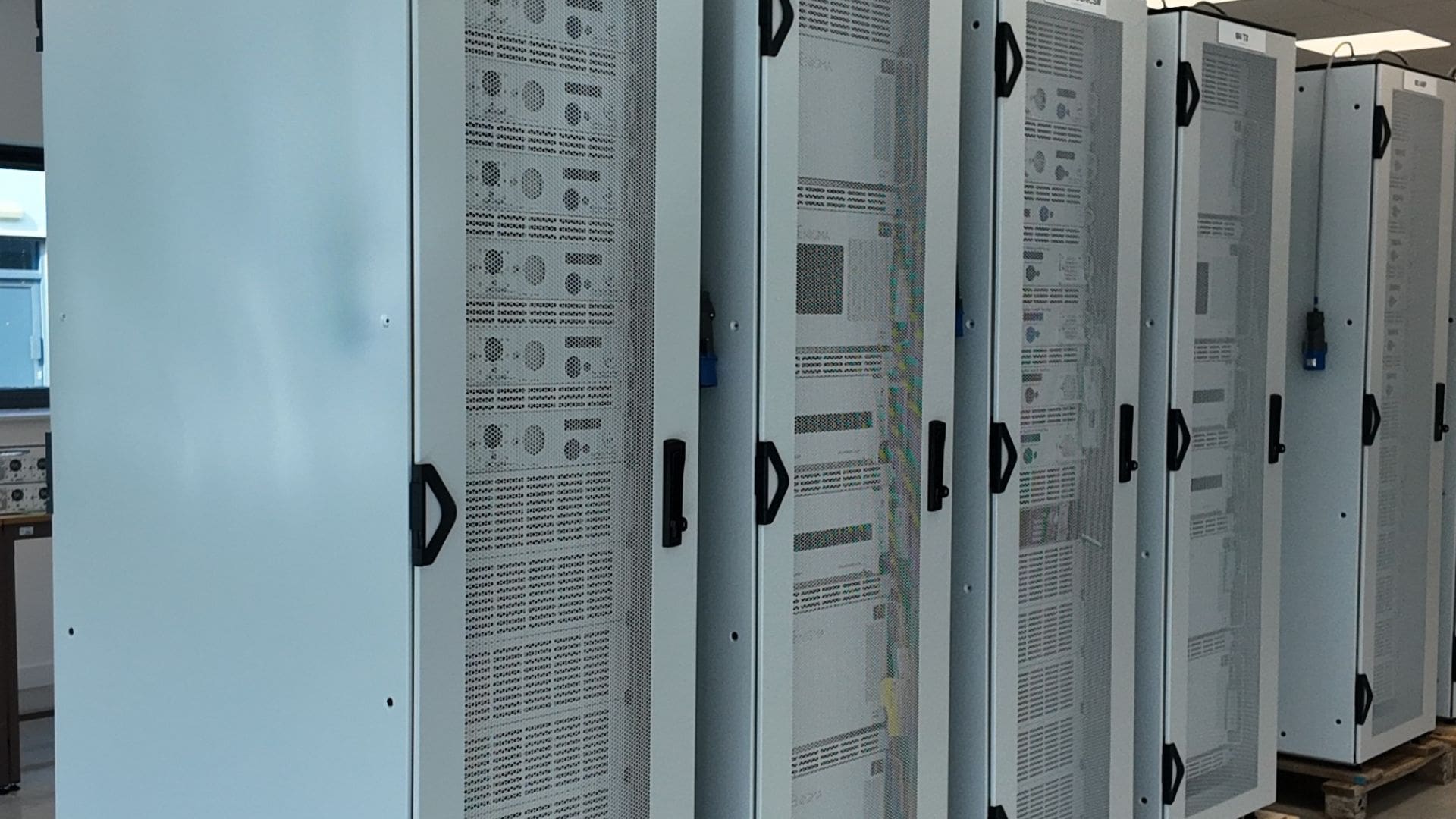
Many of these technologies are now available as part of a fully modular RF platform, consolidating traditionally separate functions into a single housing. Approaches such as ETL’s GENUS ecosystem reflect this trend, enabling switching and distribution capabilities to be co-located within a more compact, flexible unit. This can be particularly valuable in more dynamic environments, as in LEO/MEO ground stations, where requirements evolve rapidly and ‘plug and play’, modular scalability is key.
By investing in such technologies, operators can extend both the life and value of existing systems while preparing for future expansion.
Scaling through Digital IF (DIF or RF over IP)
Digital IF technology – also know as RF over IP – introduces a new dimension to the discussion of future-readiness. The technology digitises the RF signal at the antenna, enabling efficient transport over IP networks, centralising processing functions, and allowing analogue satcoms infrastructure to integrate with software-defined networks (SDNs) and the future virtualised ground segment.
For defence users, this translates to greater flexibility in how signals are routed/re-routed, enhanced M&C and security, and easier integration with multi-domain or multi-network operations.
Combining the adoption of digital IF with the modular approach to RF system design through ETL’s system engineering support service means it can be introduced gradually, as part of a hybrid approach. Adopters can target key areas where a digital workstream delivers the most operational and practical benefits first, such as tactical terminals or gateway infrastructure.
What this means in practical terms
Utilising a scalable architecture, whether built from new or adapted as part of an upgrade programme to existing infrastructure, provides a low-risk pathway to modernisation. Defence organisations can adopt an iterative approach to transformation, adding capacity and capability over time as part of a flexible and responsive strategy. This strategy delivers:
- Reduced risk, through avoiding operational disruption
- Cost efficiencies, aligning investment with evolving requirements
- Future resilience, with an infrastructure that is ready to support emerging technologies and mission needs
Building future-ready ground means developing a ground segment that is scalable, robust, and ready for the challenges of the future.
For organisations looking to take the next step, exploring ETL’s end-to-end solution approach, spanning both RF and digital system design support, can help turn that vision into a practical, phased path forward.
Read more in Via Satellite’s interview with ETL CEO, Kevin Dunne.